Free library · Search & Filters · Guideline 601
Help Customers Find What They Want Fast with Smart Filters
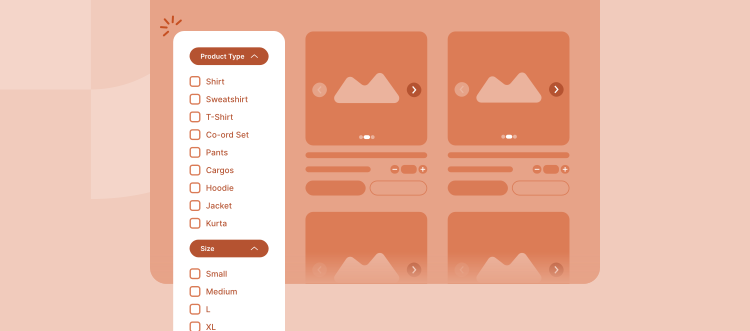
Use filters that make sense for each product category. Think about what customers are looking for and design filters to match.
Why It Matters
Why It Matters
Better for Customers
- Easier to find the right product
- Less frustration = happier shoppers
- Keeps customers browsing longer
Better for Your Business
- Fewer abandoned carts
- More purchases
- Happier customers come back
Common Problems to Avoid
Common Problems with Filters
1. Too Basic
- Filters like “Price” or “Availability” aren’t enough.
- Customers can’t quickly narrow down their choices.
2. Hard to Use
- Filters are hidden or hard to find.
- No filters for important product details like size or material.
3. Confusing Navigation
- Customers have to dig through menus to find filters.
- Filter names aren’t clear or helpful.
How to Improve
How to Fix It
1. Show Smart Filters Right Away
- Automatically show useful filters for what the customer is searching for.
- Don’t make them pick a category first.
- Place filters where they’re easy to see and use.
2. Customize Filters for Each Category
- For electronics, include “RAM” or “Screen Size.”
- For clothing, use “Size,” “Fit,” or “Style.
- For furniture, add “Material” or “Dimensions.”
3. Make Filters Easy to Use
- Use simple, clear filter names.
- Group similar filters together.
- Show how many products are available for each filter option.
- Let customers choose more than one filter at a time.
4. Use Data to Improve Filters
- Look at what customers are searching for.
- Track which filters people use the most.
- Update your filters based on customer behaviour.
Key Takeaway
The Takeaway
Smart filters make shopping easy and enjoyable for your customers, which leads to better results for your business. Regularly check how people are using your filters and update them to keep improving.